
FROM LAB TO PRODUCTION
Scale-Up & Industrialization
A formulation needs to do more than work in the laboratory. It needs a reproducible manufacturing process.
artefactum brings formulation development, process understanding and production together. We develop the route from a laboratory formula to a defined industrial manufacturing process, aligned with the formulation, the production conditions and the agreed quality requirements.

- LAB SCALELaboratory formula
- CONTROLLED TRANSITIONProcess translation
- INDUSTRIAL SCALEIndustrial manufacturing
PROCESS UNDERSTANDING
Scale-up is more than a bigger batch
The formula defines the composition. The process determines how it becomes a product.
The quantities in a laboratory formula can be increased mathematically. That does not automatically mean the product will behave in the same way under different manufacturing conditions. Vessel geometry, mixing tools and heat transfer can change the relationship between the material and the process.
The conditions that matter depend on the formulation system and the equipment used. We therefore consider process settings in relation to material structure, processing behaviour and the agreed product characteristics, rather than treating each setting in isolation.
- Mixing and structure
- Mixing performance, shear conditions and homogenisation may influence distribution and material structure.
- Temperature and time
- Heating, cooling, temperature profiles and process duration need to suit the particular system.
- Addition and material development
- Addition sequence, air incorporation, deaeration and viscosity development are considered where relevant to the product.
THE SCALE-UP BOTTLENECK
Where the transition becomes demanding
The move from a laboratory formula to production introduces different process conditions.
A formulation that performs well in the laboratory can raise new questions when transferred to production. Is the material mixed sufficiently? Is the temperature profile appropriate? When does the desired viscosity develop? How can unwanted air incorporation be limited?
This is where process translation begins. We assess the relevant relationships, define suitable trials and agree criteria for industrial implementation. Critical process questions can then be identified early and addressed directly.
LAB SCALE
Laboratory formula
Formula, raw materials and manufacturing notes
CONTROLLED TRANSITION
Process translation
- Different mixing and shear conditions
Laboratory and production equipment can create different flow patterns and shear conditions.
- Different thermal profiles
Heating and cooling behaviour may change with geometry, quantity and equipment configuration.
- Different material development
Addition, air incorporation and time-dependent structure development can be relevant to processing and reproducibility.
INDUSTRIAL SCALE
Industrial manufacturing
Process instructions, testing and release criteria
FROM FORMULA TO ROBUST PROCESS
Our scale-up framework
Six steps connect the formula, process development and industrial manufacturing.
A robust manufacturing process is built through assessment, process translation, trials and documentation. Our scale-up framework connects this work in six clear steps. The scope and sequence depend on the project, and trials and optimisation may require more than one iteration.
Formula Assessment
Composition, raw material specifications, existing manufacturing notes and target criteria provide the basis for assessing industrial feasibility.
Outcome: a clear starting point and the relevant questions to assess.
Process Translation
Laboratory steps are considered in relation to the intended manufacturing conditions. Mixing, thermal profiles and addition sequence are assessed as one connected process.
Outcome: a reasoned process concept for trials.
Pilot / Transfer Trial
An appropriate trial scope is agreed. Where necessary and technically feasible, transfer is assessed through a pilot or transfer batch.
Outcome: observations and test results under the agreed trial conditions.
Process Optimisation
Trial findings inform adjustments to the process conditions. Changes are assessed against the agreed product and processing criteria.
Outcome: process conditions adjusted on a documented basis.
Process Verification & Documentation
The manufacturing sequence, relevant parameters, testing and release criteria are documented. The need and scope for formal validation are determined for the specific project.
Outcome: a defined basis for manufacturing, testing and release.
Industrial Manufacturing
Manufacturing follows the agreed process and applicable quality requirements. Batch documentation and release remain part of the agreed workflow.
Outcome: industrial manufacturing within the defined process and quality framework.
THREE ENTRY POINTS
Three starting points. One shared objective.
The route to production starts with your specific situation.
Scale-up can build on an existing formula, a joint development project or an established artefactum concept. The starting information, applicable requirements and industrial feasibility determine the next steps.
- 01
Your formula
You bring an existing formulation. Using the available formula, raw material and process information, we assess its transferability and any adjustments that may be needed.
- 02
Developed with artefactum
In a joint development project, manufacturing requirements can be considered early. Laboratory work and process transfer are coordinated.
- 03
artefactum technology
Existing formulations or technologies can provide a starting point. FastTrack and CosVention are included where they suit the product concept and its technical requirements.
CONNECTED CAPABILITIES
Connect development and manufacturing
Formulation knowledge, process development and production work together.
artefactum connects research, development and production at its Rudolstadt site. For scale-up, this means industrial requirements can be considered during formulation work. Findings from trials and manufacturing can also feed back into development.
Quality supports this connection. Testing, documentation and release requirements are not simply added at the end; they are agreed within the project.
Formulation science
Understand composition, material behaviour and product objectives.
Process development
Align the manufacturing route with the formula and production conditions.
Production and quality
Include defined procedures, testing and documentation in implementation.
Quality and documentation accompany the entire process
INDUSTRIAL CAPABILITY
Industrial manufacturing in Rudolstadt
Manufacturing, quality requirements and documentation form one connected framework.
At its Rudolstadt site, artefactum connects development with cosmetic manufacturing and filling. Process instructions, product testing requirements and documentation are aligned with the agreed project requirements.
For transfer into manufacturing, we agree the process framework and release criteria. Additional evidence or testing requirements depend on the formulation, its intended application and the scope of the project.
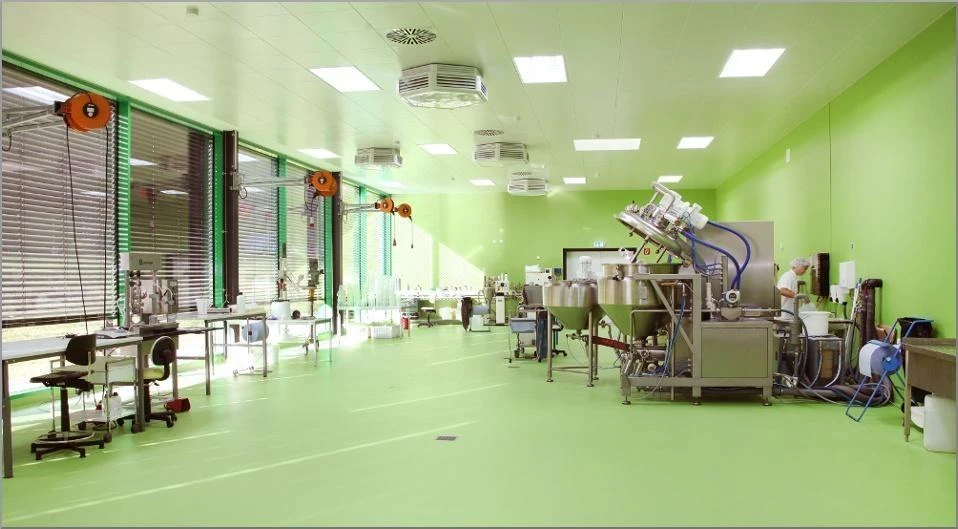
- Manufacturing and filling
- The intended production route is considered alongside the formulation requirements.
- Quality control
- Agreed criteria provide a shared basis for assessing the manufactured batch.
- Documentation
- The agreed manufacturing sequence and relevant testing information are recorded in a traceable way.
TECHNOLOGIES AND PROCESS REQUIREMENTS
Different systems. Different process questions.
Technology examples show why formulation and manufacturing need to be considered together.
Different formulation systems raise different questions. The following artefactum technologies illustrate this range. The manufacturing route and relevant testing are assessed for the specific variant.

Cream-in-Gel
For cream-and-gel concepts, phase handling, material structure and manufacturing sequence may be relevant process considerations.
Explore the technology
Hydra Jelly Technology
For gel-based concepts, structure development and processing behaviour may need to be considered.
Explore the technology
Natural Algae Eyepads Technology
For pad-based systems, the material state and intended processing steps form part of the assessment.
Explore the technology
Advanced Non-Aerosol Foam Technology
For foam concepts, the formulation and its intended application or dispensing are considered together.
Explore the technology
WHAT SCALE-UP ENABLES
Technical clarity for the next decision
A defined process provides a stronger basis for industrial implementation.
Scale-up connects product objectives with manufacturing conditions. It gives R&D, procurement and management a shared basis for decisions: What is the intended technical route? Which points have been assessed? Where are further trials or decisions needed?
- Develop process robustness
- Relevant process conditions are assessed and defined on a documented basis.
- Support reproducibility
- Agreed criteria and documented procedures help batches to be assessed consistently.
- Structure industrial transfer
- Tasks, assessment questions and next steps become clearer, allowing open points to be addressed earlier.
- Include quality in manufacturing
- Process, testing and documentation requirements are planned together.
BRING YOUR FORMULATION TO INDUSTRIAL SCALE
Let’s discuss the route from your formulation to production
An existing formula, a joint development or an artefactum technology: we can identify the appropriate next step.
Tell us about your starting point, the intended product type and the stage of your development. Together, we can identify the next steps for process transfer, trials and industrial implementation.
Confidential formula and process data do not need to be included in your first inquiry. How they are shared can be agreed as the project progresses.